| The Southern highway project in Sri Lanka is a 126km-long express highway running from Colombo to Matara on the south coast. The project is a major part of the 130.9km Southern Transport development project. The Southern Highway project was divided into two sections for financing purposes. The first section consists of the expressway from Kottawa (a suburb in Colombo) to Kurundugahahetekma. The second section consists of the long expressway from Kurundugahahetekma to Matara.  "Construction was started in 2003 and the project is anticipated to be completed by 2010." The southern region of Sri Lanka will become easily accessible once the project is completed. The project will increase road safety and the travel time between Colombo and Matara will be greatly reduced. The project was initially estimated to cost $348.75m, but escalated to $741.1m. Construction was started in 2003 and the project is anticipated to be completed by 2010. Planning and design The expressway between Kottawa and Kurundugahahetekma is 66.5km long. The section is divided into two parts: package I and package II. Package I comprises the road from Kottawa to Dodangoda (35km) and package II is from Dodangoda to Kurundugahahetekma (31.5km). The road in package I was originally planned to be a four-lane road and package II a two-lane road. However, while implementing the project, a decision was taken that the entire expressway should be a four-lane road structure, with phase II expanded from the planned two lanes. The project's second section involves construction of a 59.5km-long four lane road between Kurundugahahetekma and Matara. The speed limint of the express highway is 120km/hr. Once the project is finished, the travel time between Colombo and Matara will be reduced from four hours to 1.5 hours. Financing The project is being financed by Japan Bank for International Corporation (JBIC), the Asian Development Bank (ADB) and the Government of Sri Lanka (GOSL). JBIC provided a loan of $2.05bn, while ADB and GOSL provided $1.03bn and $1.26bn, respectively. JBIC's loan is availed for the 66.5km-long first section expressway from Kottawa to Kurundugahahetekma while ADB is funding the 59.5km-long second section expressway from Kurundugahahetekma to Matara. Construction Construction commenced on the ADB-funded section in April 2003. Package I in the other section commenced construction in September 2005 whereas package II commenced in March 2006. The Ministry of Highways of Sri Lanka is the executing agency of the project whereas the Road Development Authority is the implementing agency. "The project was initially estimated to cost $348.75m, but escalated to $741.1m." The intersections on the Colombo-Matara expressway include Kottawa, Baddegama, Kahatuduwa, Pinnaduwa, Gelanigama, Deegoda, Dodangoda, Kokmaduwa, Welipanna, Godagama and Kurundugahetekma. The majority of the construction work of the ADB-funded section of the project such as construction of bridges, tunnels and earth fillings has been finished as of September 2009. Other works including carpeting and fencing remain to be completed. Bridge construction A total of 22 bridges are being constructed along the expressway. As of 2009, three bridges have opened: the Kalu Ganga bridge, the Welipenna Bridge and the Benthara Ganga bridge. These bridges were opened in part to mitigate flooding in their respective areas. Contractors The ADB-funded section or the road from Kurundugahahetekma to Matara Godagama was contracted to Kumagai Gumi of Japan. The contractor was selected by the Road Development Authority of Sri Lanka in December 2002. Under the contract, Kumagai has to build a 29km-long express highway, a 5km access road and 16 bridges. The supervision consultants in the section are Halcrow Group with Roughton International and Engineering Consultant. Package I of the section was contracted to China Harbor Engineering Company while package II was contracted to Taisei Corporation of Japan. The civil works contractor pre-qualification was completed in March 2003. In March 2004, bid documents were issued to the prequalified contractors and the bids were closed in June 2004. The supervision consultants are Pacific Consultant International with Resources Development Consultant. | 
 Expand Image Expand Image
The Southern highway project in Sri Lanka is a 126km-long express highway running from Colombo to Matara on the south coast. |
 Expand Image
Southern districts of Sri Lanka. | |
 Expand Image
The project was initially estimated to cost $348.75m, but escalated to $741.1m. |

Sunday, September 5, 2010
Sri lanka Highway Construction

Bridge seals

A basic requirement for the functional efficiency of many structures, including bridges, is a durable seal. The reliability of the type of seal is crucial for the safety, functional performance, value in use and service life of a bridge. Reinforced concrete has a tendency to crack under high thermal and mechanical loads. Through constant movement, the cracks become bigger over the course of time, rainwater and aggressive substances from the environment penetrate into the cracks, destroy the concrete and attack the steel. The structural safety of the building may even be at risk. Reinforced concrete structures subjected to this kind of environmental stress should therefore be treated at the earliest possible stage with a permanently elastic, crack-bridging seal capable of long-term resistance to all manner of loads. Due to its high flexibility and high elongation at break, building structures can be safely and durably sealed with Baytec® Spray Systems.
Wednesday, August 25, 2010
Curing Concrete in Construction
By Jerzy Z. Zemajtis, Ph.D., PE (WA)*
 Curing plays an important role on strength development and durability of concrete. Curing takes place immediately after concrete placing and finishing, and involves maintenance of desired moisture and temperature conditions, both at depth and near the surface, for extended periods of time. Properly cured concrete has an adequate amount of moisture for continued hydration and development of strength, volume stability, resistance to freezing and thawing, and abrasion and scaling resistance.
The length of adequate curing time is dependent on the following factors:
- Type of cementitious materials used
- Mixture proportions
- Specified strength
- Size and shape of concrete member
- Ambient weather conditions
- Future exposure conditions
American Concrete Institute (ACI) Committee 301 recommends a minimum curing period corresponding to concrete attaining 70% of the specified compressive strength2. The often specified 7-day curing commonly corresponds to approximately 70% of the specified compressive strengths. The 70% strength level can be reached sooner when concrete cures at higher temperatures or when certain cement/admixture combinations are used. Similarly, longer time may be needed for different material combinations and/or lower curing temperatures. For this reason, ACI Committee 308 recommends the following minimum curing periods3:
- ASTM C 150 Type I cement 7 days
- ASTM C 150 Type II cement 10 days
- ASTM C 150 Type III cement 3 days
- ASTM C 150 Type IV or V cement 14 days
- ASTM C 595, C 845, C 1157 cements variable

Figure 1. Moist Curing Time and Compressive Strength Gain

There are three main functions of curing:
1) Maintaining mixing water in concrete during the early hardening process
a. Ponding and immersion
Ponding is typically used to cure flat surfaces on smaller jobs. Care should be taken to maintain curing water temperature at not more than 11°C (20°F) cooler than the concrete to prevent cracking due to thermal stresses.
Immersion is mainly used in the laboratory for curing concrete test specimens.
b. Spraying and fogging
Spraying and fogging are used when the ambient temperatures are well above freezing and the humidity is low. Fogging can minimize plastic shrinkage cracking until the concrete attains final set.
c . Saturated wet coverings
Wet coverings saturated with water should be used after concrete has hardened enough to prevent surface damage. They should be kept constantly wet.
d. Left in Place Forms
Left in place forms usually provide satisfactory protection against moisture loss for formed concrete surfaces. The forms are usually left in place as long as the construction schedule allows. If the forms are made of wood, they should be kept moist, especially during hot, dry weather.
2) Reducing the loss of mixing water from the surface of the concrete
a. Covering concrete with impervious paper or plastic sheets3) Accelerating strength gain using heat and additional moisture
Impervious paper and plastic sheets can be applied on thoroughly wetted concrete. The concrete surface should be hard enough to prevent surface damage from placement activities.
b. Applying membrane-forming curing compounds
Membrane-forming curing compounds are used to retard or reduce evaporation of moisture from concrete. They can be clear or translucent and white pigmented. White-pigmented compounds are recommended for hot and sunny weather conditions to reflect solar radiation. Curing compounds should be applied immediately after final finishing. Curing compound shall comply with ASTM C3094 or ASTM C13155.
a. Live steam
Live steam at atmospheric pressure and high-pressure steam in autoclaves are the two methods of steam curing. Steam temperature for live steam at atmospheric pressure should be kept at about 60°C (140°F) or less until the desired concrete strength is achieved.
b. Heating coils
Heating coils are usually used as embedded elements near the surface of concrete elements. Their purpose is to protect concrete from freezing during cold weather concreting.
c. Electrical heated forms or pads
Electrical heated forms or pads are primarily used by the precast concrete producers.
d. Concrete blankets
Concrete insulation blankets are used to cover and insulate concrete surfaces subjected to freezing temperatures during the curing period. The concrete should be hard enough to prevent surface damage when covering with concrete blankets.
Other forms of curing include internal moist curing with lightweight aggregates or absorbent polymer particles. For mass concrete elements (usually thicker than 3 ft.), a thermal control plan is usually developed to help control thermal stresses. Additional information can be found in ACI Committee 308 report Guide to Curing Concrete3. For specialty concretes, it is recommended to refer to other ACI reports as follows:
- Refractory concrete ACI 547.1R
- Insulating concrete ACI 523.1R
- Expansive cement concrete ACI 223
- Roller-compacted concrete ACI 207.5R
- Architectural concrete ACI 303R
- Shotcrete ACI 506.2
- Fiber-reinforced concrete ACI 544.3R
- Vertical slipform construction ACI 313
Curing in either cold or hot weather requires additional attention. In cold weather, some of the procedures include heated enclosures, evaporation reducers, curing compounds, and insulating blankets. The temperature of fresh concrete shall be above 10°C (50°F). The curing period for cold weather concrete is longer than the standard period due to reduced rate of strength gain. Compressive strength of concrete cured and maintained at 10°C (50°F) is expected to gain strength half as quickly as concrete cured at 23°C (73°F). In hot weather, curing and protection are critical due to rapid moisture loss from fresh concrete. The curing actually starts before concrete is placed by wetting substrate surfaces with water. Sunscreens, windscreens, fogging, and evaporation retardants can be used for hot weather concrete placements. Since concrete strength gain in hot weather is faster, curing period may be reduced. Additional information can be found in ACI 306.1, Standard Specification for Cold Weather Concreting, ACI 306R, Cold Weather Concreting, ACI 305.1, Specification for Hot Weather Concreting, and ACI 305R, Hot Weather Concreting.
Curing Concrete Test Specimens
Curing of concrete test specimens is usually different from concrete placed during construction. American Society for Testing and Materials (ASTM) has developed two standards for making and curing concrete specimens. ASTM C192 6 is intended for laboratory samples while ASTM C317 is intended for field samples. Both documents provide standardized requirements for making, curing, protecting, and transporting concrete test specimens under field or laboratory conditions, respectively.
ASTM C192 provides procedures for evaluation of different mixtures in laboratory conditions. It is usually used in the initial stage of the project, or for research purposes.
ASTM C31 is used for acceptance testing and can also be used as a decision tool for form or shoring removal. Depending on its intended purpose, the standard defines two curing regimes: standard curing for acceptance testing and field curing for form/shoring removal. Variation in standard curing of test specimens can dramatically affect measured concrete properties. According to the National Ready Mix Concrete Association 8 (NRMCA), strength for concrete air cured for one day followed by 27 days moist cured will be approximately 8% lower than for concrete moist cured for the entire period. The strength reduction is 11% and 18% for concrete specimens initially cured in air for 3 days and 7 days, respectively. For the same air/moist curing combinations, but 38°C (100°F) air curing temperature, the 28-day strength will be approximately 11%, 22%, and 26% lower, respectively.
* Jerzy Z. Zemajtis, Ph.D., PE (WA)
Senior Engineer, CTLGroup, Skokie, IL
begin_of_the_skype_highlighting (847) 832-0260 end_of_the_skype_highlighting, jzemajtis@ctlgroup.com
(847) 832-0260 References:
1S. Kosmatka et al, Design and Control of Concrete Mixtures, 14th Edition, PCA Engineering Bulletin EB 001, Portland Cement Association , Skokie, IL 2002
2 Specifications for Structural Concrete, ACI 301 (www.concrete.org)
3 Guide to Curing Concrete, ACI 308R-01 (www.concrete.org)
4 ASTM C309, Standard Specification for Liquid Membrane-Forming Compounds for Curing Concrete (www.astm.org)
5 ASTM C1315, Standard Specification for Liquid Membrane-Forming Compounds Having Special Properties for Curing and Sealing Concrete (www.astm.org)
6 ASTM C192 / C192M, Standard Practice for Making and Curing Concrete Test Specimens in the Laboratory (www.astm.org)
7 ASTM C31 / C31M, Standard Practice for Making and Curing Concrete Test Specimens in the Fieldwww.astm.org) (
8 David N. Richardson, Review of Variables that Influence Measured Concrete Compressive Strength, NRMCA Publication 179, NRMCA, Silver Spring, MD, 1991.
The Link Between Concrete Sustainability and Curing
Sustainability, according to the Bruntland Report and adopted by many experts, is development that meets the needs of the present without compromising the ability of future generations to meet their own needs. This can be accomplished in one of two ways: either by using recyclable, reusable, or so little resources that future generations have the same access to them; or by producing development that meets our needs as well as the needs of future generations. We can use proper curing of concrete to advance towards the reduction of resource use.
A concrete element is expected to last a certain number of years. In order to meet this expected service life, it must be able to withstand structural loading, fatigue, weathering, abrasion, and chemical attack. The duration and type of curing plays a big role in determining the required materials necessary to achieve the high level of quality.
 Curing is the process in which the concrete is protected from loss of moisture and kept within a reasonable temperature range. The result of this process is increased strength and decreased permeability. Curing is also a key player in mitigating cracks in the concrete, which severely impacts durability. Cracks allow open access for harmful materials to bypass the low permeability concrete near the surface. Good curing can help mitigate the appearance of unplanned cracking.
When smart, suitable, and practical curing is used, the amount of cement required to achieve a given strength and durability can be reduced by either omission or replacement with supplementary cementitious materials. Since the cement is the most expensive and energy intensive portion of a concrete mixture, this leads to a reduction in the cost as well as the absolute carbon footprint of the concrete mixture. Additionally, being practical with curing methods can enhance sustainability by reducing the need for resource intensive conditioning treatments, should the curing method be incompatible with the intended service environment.
Curing Pavements and Bridge Decks
While curing of concrete is an important issue with all concrete applications concrete pavements and bridge decks require careful consideration and have significantly different needs with regard to curing of the concrete of these structures. Both categories have basic requirements for the durability of the structures including strength, abrasion resistance, freezing and thawing and deicer resistance, and, in the case of bridges, low permeability for corrosion protection of the reinforcement of the structure.
 Typical recommendations for curing of pavements allow the use of sheet curing, moist curing, or application of a film forming curing compound. Due to the large surface areas typical of concrete paving the application of curing compound to all exposed surfaces is the most common curing method. Moist curing and sheet curing of large surface areas may become cost prohibitive due to the large quantity of materials required to cover the full surface of concrete placed in any single day. In addition moist curing and sheet curing require maintenance to assure the curing method is properly completed for the full time duration chosen for paving (typically 7 days). Moist coverings require rewetting and sheet goods are prone to being disturbed by wind, either of which would reduce the effectiveness of the curing method.
Curing compounds should be applied to pavements as soon as possible after bleed water has left the surface of the concrete at a rate of 5 m 2/L (200 ft2/gal) for standard mixtures and application, 3.75 m2/L (150 ft2/gal) for fast track paving, and 2 1/2 m2/L (100 ft2/gal) for slabs thinner than 125 mm (5.0 in.)
In contrast concrete bridges require a higher standard of curing to achieve the low permeability required for protection of steel reinforcement. Standard recommendations for curing bridge decks is moist curing for a minimum of 7 days for concrete mixtures containing only portland cement and as long as 14 days when supplementary cementing materials are included in the concrete mixture. Some states also require the application of curing compound upon removal of the moist curing methods.
Typical moist curing for bridge decks requires the application of adequate quality water saturated burlap or other approved absorptive material covered with minimum 6 mil plastic covering. The temperature of the saturated materials should be within 11°C (20°F) of the temperature of the in-place concrete. In most cases plastic will be specified to be white in color to reflect solar radiation, reducing the temperature rise beneath the plastic, while cold temperatures (less than 10°C (50°F)) may allow the use of black plastic to add heat to the system. Proper moist curing will also require uncovering and rewetting the absorptive material to assure that there is a constant supply of water available to satisfy the evaporation rate at the project site.
References
Design and Control of Concrete Mixtures, 14th Edition, EB001
Construction Specification Guidelines for Concrete Streets and Local Roads, IS119
HPC Bridge Views, Issue No. 45, Fall 2006
Concrete Curing Compound


Concrete Curing Compound in practice
Curing is one of the last and perhaps the most neglected step in the manufacture of precast concrete products. The need for rapid production is of great importance in this industry. Balance between production rates and quality can be achieved through continuous improvement in product design, raw materials, manufacturing processes and employee education. Concrete Curing Compound is just one of the tools employed to facilitate the concrete curing process.What Is Curing?
Simply stated, proper curing creates the optimum environment to promote the hardening or hydration of freshly cast concrete. Hydration is the chemical process that ultimately binds cement particles and aggregates into hardened concrete. Creating the optimum environment involves:
- Monitoring and controlling the humidity to prevent moisture loss from the fresh concrete. The primary object of curing is to prevent or replenish the loss of necessary moisture during the early, relatively rapid stage of hydration.
- Monitoring and controlling the temperature of the concrete and gradients (i.e., providing a favorable temperature (50-90°F) under conventional curing conditions and up to 150°F under low-pressure steam curing).
Prevention of the loss of water from the concrete is of importance not only for the loss of strength, but it also leads to increased permeability, plastic shrinkage and other undesirable factors.
Conventional curing and low-pressure steam curing are two of the more common methods of curing precast concrete products.
Other Concerns During Curing
During curing, concrete products should also be protected from impact, loading, vibration, and other mechanical disturbances.
Why Cure Concrete?
Concrete gets hard as a result of the chemical reaction of the mix water and the cement, a reaction that starts at the instant the two materials first come in contact with each other, and can continue for many years. Concrete that “dries” out will not reach its design strength or meet specifications. The longer the cure, the better the concrete.
In general, all specifications will include details regarding curing of concrete products.
Curing Methods
Physical barriers to prevent evaporation
- Leaving forms in place
- Polyethylene sheets/tarps
- Curing papers
- Saturated burlap
- Ponding
- Fog Spray
- Synthetic resin (plastic) base
- Wax base
- Wax and synthetic resin base
- Acrylic polymers in water base
Advantages of Concrete Curing Compound
- Easy to apply
- Cost effective
- No need for continuous monitoring or application as would be required for fog-spray systems or wetting burlap
- Minimal equipment requirements and costs
- No debris or tarps to reuse and store
Essential Properties of a Concrete Curing Compound
- Forms an impervious film on concrete
- Free of pinholes
- Strongly adheres to surface of concrete
- Prevents the concrete mixing water from evaporating
In general, high-solids Concrete Curing Compound (about 30% solids) greatly reduce moisture loss. Better polymers in newer formulations can also be extremely effective, even with lower solids content. ASTM C-309 requires curing compounds to have a maximum moisture loss rate of 0.55 kilograms per square meter of surface in 72 hours. This standard requires a coverage rate of 200 square feet per gallon. Moisture loss when using a high solids curing compound at a coverage rate of 300 square feet per gallon will generally allow a lower maximum moisture loss of about 0.30 kilograms per square meter.
Products that cure and seal concrete tend to have higher solid content. Application of high-solids products is easier because they are unlikely to be applied too thin. These compounds leave a gloss on the concrete surface, so it is easy to see when coverage is complete.
Questions to Ask Your Concrete Curing Compound Supplier
- Compliant with ASTM C-390, Liquid Membrane – Forming Compounds for Curing Concrete
- Non-hazardous. Read the MSDS (Material Safety Data Sheet) before ordering
- VOC (Volatile Organic Compound) Compliant
- Compatible with form release agent
- Will not adversely affect subsequent use of sealers, coatings, and paint applied to the cured concrete
- Cost per square applied: ______________
- Mixing requirements, one part component
- Ease of applying to recommended thickness
- Application equipment concerns:
- Ease of use
- Maintenance and Cleanup
- Initial cost
- Presence of fugitive dye or pigment (will show during application, but fades in a few days)
- Staining of finished product
- Percent/Solids: ______________
- Storage requirements
Some concrete curing compound can also be used as a sealer, hardener, and dust reducer. These products may have an acrylic polymer, sodium silicate, or chlorinated rubber base. Some cure and seal products can interfere with the bonding of coatings, coverings, or tile to the finished precast surface. Check with your supplier for use in these applications.
Application
“Prepare surfaces and apply concrete curing compound in accordance with manufacturer’s recommendations.”
Read the Directions
After the concrete has received its final finish (1-3 hours after concrete placement) and the water sheen has disappeared from the surface. Pinholes in the curing compound film will occur if applied when there is still standing water on concrete surface. Using pigmented curing compounds helps achieve complete application coverage. If the concrete appears to be dry, wet the surface before applying the concrete curing compound.
Concrete Curing Compound should be sprayed on uniform surfaces as soon as the water sheen disappears but while the surface is still moist to ensure adequate performance (i.e., 1-3 hours after concrete placement). Curing compounds should be stirred or agitated as needed prior to use.
Apply the curing compound in two applications, at right angles, to form a continuous film coating all surfaces of the precast product. Application of the coats in two directions (i.e., vertically and horizontally) while help to ensure full coverage.
Don’t thin or alter curing compounds
When possible, keep steel forms on new precast concrete products as long as possible. This is an excellent first step in protecting against loss of moisture.
Other concerns during curing
During curing, concrete products should also be protected from impact, loading, vibration, and other mechanical disturbances.
All beneficial properties of precast concrete including strength, durability and watertightness are enhanced through proper curing techniques.
Don’t Forget to CURE Curing, particularly within the first few hours after concrete placement, is one of the most important factors in manufacturing top quality precast concrete products. Properly cured precast concrete products have superior early and long term strength. Well cured precast concrete products are less permeable, more durable, and have greater surface hardness.
Proper use of quality Concrete Curing Compound is an excellent method to facilitate the production of top notch precast products. But don’t forget to maintain proper temperatures during curing and to protect your products from impact and vibration during this period or no matter how much Concrete Curing Compound you use it will not matter .
Thursday, August 19, 2010
Dubai rental slide slows down in Q2
- By Binesh Panicker, sub-editor, Freehold Monthly
- Published: 00:00 August 15, 2010


- Rents continued to decline in Q2 but at a slower pace, according to CBRE
- Image Credit: Supplied
Matthew Green, head of research and consultancy UAE, CB Richard Ellis Middle East, says while there is an increasing degree of stability in the leasing market, the general trend is still downward.
"Areas that are seeing significant supply from multiple new projects continue to be most impacted as heightened competition and a greater level of choice is resulting in further rate reductions as landlords scrabble to secure tenancies in fear of growing rental voids. Obviously the rate of decline has slowed considerably and we are hopeful that this prolonged period of constancy will in time begin to build some more positive sentiment in the market."
Jumeirah Lakes Towers (JLT) and The Greens have been the most affected developments and Green attributes this to huge volumes of new supply that have come on stream in a very limited period.
While JLT has been adversely affected by infrastructure issues in terms of road networks and the lake, it is the traffic congestion in and around The Greens and the emergence of new properties such as Dubai Marina at competitive rates that has resulted in rising vacancy rates and reduced leasing potential in the development, explains Green.
He expects Q3 to be subdued with the usual summer slowdown and Ramadan. "With a large portion of the resident population choosing to take vacations to avoid the summer heat, the quarter is likely to see reduced activity across the board which could have a further impact on leasing rates," says Green.
bpanicker@alnisrmedia.com
Original news
Tuesday, August 17, 2010
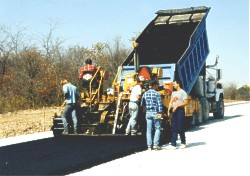
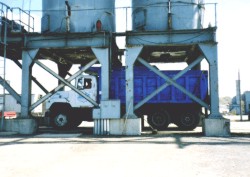
Asphalt Paving Operation
by Stephanie Paul, Linda Puspa-Dewi, Kamolwan Lueprasert & Heinko Dona Madon
|
Monday, August 16, 2010
Doka’s Formwork System
Doka’s Formwork System Achieves Pristine Architectural Concrete Finish on University of Pennsylvania Campus
As more and more building owners begin to embrace the architectural possibilities of concrete, achieving a high-end concrete finish has become a top priority on many job sites. Such is the case on a mixed-use student housing project currently under construction on the University of Pennsylvania campus, where the exposed concrete on the 14-story structure demanded an impeccable finishing job. Although “architectural concrete” or “fair-faced concrete” have been coined as the accepted verbiage to describe such a pristine finish, there is still some discussion about the best way to achieve it. In general, most concur that success is tied to three main variables: a proper formwork system, the right concrete formula and the care that is taken when pouring the concrete and stripping the forms. With the first of these concerns in mind, B. Pietrini & Sons, the concrete contractor for the 350,000-square-foot Walnut Street 14-story housing project, turned to Doka USA to provide a variety of formwork solutions. Before the project began, planning efforts focused heavily on form design and layout to make sure the architectural details of the structure could be constructed without a hitch. Because the concrete exterior will be left exposed once the project is complete, it was paramount to select formwork that would aid in this quality of finish. All of Doka’s formwork systems allow the contractor to specify any type of form facing and tie-hole pattern, meaning that B. Pietrini & Sons was free to choose the option that would give the best finish.
“Because of the design intent, the quality of the finished concrete really matters in this project. That is why we chose Doka to supply the formwork for this project because we needed extensive engineered drawings, good quality equipment and on-time deliveries,” stated Mike Vail, Project Manager, B. Pietrini & Sons.
The architectural concrete motif also can be found on the building’s interior as the architect designed 36-foot diagonal beams constructed using exposed concrete as a main feature. The main floor of the project, which is 36 feet in height, will be used for commercial and retail space. However, not all of the building’s levels were the same height—four of the 14 floors varied in height up to 36 feet. Framax Xlife was used to form all of the columns on these floors.
 The special pattern of holes makes Doka’s Framax Xlife panels ideal for the economical forming of outside corners, wall connections, bulkheads and columns. According to John Podkrajac, Doka Account Manager, Framax Xlife provides an exceptional finish and the strong clamping system was well suited on this project for the 39-foot-plus pours. The columns for the remaining 10-foot floors were formed using the lightweight Frami system, while the shear and core walls were all formed using Top 50 large-area formwork, along with MF-240 climbing platforms, which were mounted on all of the exterior walls to ensure safe working conditions. The main entrance of the building is set off by two V-shaped columns, which were also formed using the Top 50 system. The Top 50 modular gang form system is constructed out of standard parts that can be assembled in any configuration for a wide range of applications. Shape, size, tie pattern, and plywood can be adapted to suit your jobsite requirements.
Work began on the project in February 2007, and the use of the Doka formwork has helped accommodate the relatively tight construction schedule—the Top 50 forms were pre-assembled and delivered to the site, and the ease of erection for the Framax and Frami formwork (both of which can be assembled using just a hammer and two lightweight clamps) helped produce quick cycling results for the columns. When it is completed in 2008, the building will house ground-level retail space, a mixed-use mezzanine level and 11 floors of student apartments for Penn students.
About DOKA
With nearly 50 years experience in formwork engineering, DOKA serves customers in more than 35 countries and has participated in construction of some of the world’s best known structures including the world’s tallest skyscraper (Burj Dubai), the Hoover Dam Bypass bridge, along with many other projects of all sizes. From wall and slab formwork systems to automatic climbing technology and superior safety solutions, Doka can deliver any type of formwork needed for residential, industrial, commercial, transportation, infrastructure as well as stadium and sports arena projects. For more information, please visit www.dokausa.com
FOR MORE DETAILS